1h 54m
YouTube
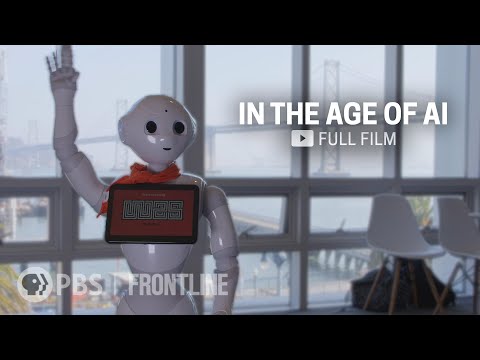
In the Age of AI — FRONTLINE Documentary
2 hours
FRONTLINE's documentary on artificial intelligence, its economics and who carries the cost.
Beginner
Free Online CourseView course
Every course from every provider we track, with the same filters over all of them: level, length, price, certificate and who stands behind it.
220 courses for “Statics and Dynamics in Engineering Mechanics”
2 hours
FRONTLINE's documentary on artificial intelligence, its economics and who carries the cost.
5 hours
Five hours on MLOps: getting a model out of a notebook and keeping it running.
New courses, a couple of emails a month. One click unsubscribes.
4 hours
Four and a half hours of Python from nothing, the course most people start with.
55 minutes
Confusion matrices, precision, recall and ROC curves, worked through in scikit-learn.
32 minutes
A university lecture on evaluating a model: the measures, and what each one hides.
13 minutes
Thirteen minutes on how a model is judged, and why accuracy alone is rarely the answer.
55 minutes
Building a working e-commerce data pipeline, start to finish, with Snowflake and dbt.
3 hours
Nearly three hours on time series: the components, the models, and the forecasts built from them.
2 hours
An hour and a half of forecasting in Python, for somebody who has not done it before.
2 hours
An hour and a half on association rules: finding what goes with what in a transaction log.
2 hours
Two and a half hours on decision trees — how one is built, and how it is read.
4 hours
Three and a half hours on clustering: k-means, hierarchical methods, and choosing between them.
10 hours
Ten hours of data mining: the techniques, the algorithms and what each is for.
22 minutes
How categorical columns become numbers a model can use, and what goes wrong when they do not.
5 minutes
Natural Language Processing (NLP)
The shortest useful answer to what NLP is and where it is used.
12 minutes
Natural Language Processing (NLP)
Twelve minutes on what natural language processing is and how it came to work.
8 minutes
What independence means in probability, and what changes when events depend on each other.
17 minutes
Sample spaces, events and the basic rules of probability, in seventeen minutes.
12 hours
Eleven hours of statistics and probability for data science, from first principles.
19 hours
Nineteen hours across SQL, Tableau, Power BI, Python, Excel and pandas — the analyst toolset in one course.