3h 37m

YouTube
Clustering in Data Mining — K-Means and Hierarchical
4 hours
Three and a half hours on clustering: k-means, hierarchical methods, and choosing between them.
Beginner
Free Online CourseView course
Technology is the widest part of this catalogue, and the place most people start. Underneath it sit cloud computing, artificial intelligence, cybersecurity, data science, web development, DevOps, databases, game development, UX/UI design, product management and more, each with its own page and its own filters.
Most of what is listed here is pitched at beginners, and a large share costs nothing to begin. Courses come from YouTube creators working in the open alongside structured programmes from Noble Desktop and the UC San Diego Division of Extended Studies, so a first hour of curiosity and a paid certificate track sit side by side rather than in separate worlds.
Every course is compared on the same terms: level, length, price, whether it ends in a certificate, and who stands behind it. Use the filters to narrow by subject, by level or by length, and open any course to see where it is taught before you commit an afternoon to it.
220 courses
4 hours
Three and a half hours on clustering: k-means, hierarchical methods, and choosing between them.
10 hours
Ten hours of data mining: the techniques, the algorithms and what each is for.
13 minutes
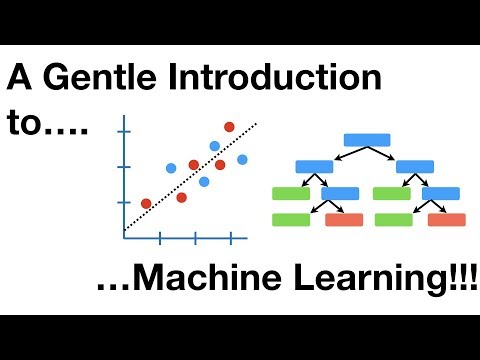
What machine learning is, explained without the mathematics, in thirteen minutes.
22 minutes
How categorical columns become numbers a model can use, and what goes wrong when they do not.
1 hour
Natural Language Processing (NLP)
An hour on the step every NLP pipeline starts with: turning text into something a model can read.
5 minutes
Natural Language Processing (NLP)
The shortest useful answer to what NLP is and where it is used.
12 minutes
Natural Language Processing (NLP)
Twelve minutes on what natural language processing is and how it came to work.
8 minutes
What independence means in probability, and what changes when events depend on each other.
17 minutes
Sample spaces, events and the basic rules of probability, in seventeen minutes.
12 hours
Eleven hours of statistics and probability for data science, from first principles.
19 hours
Nineteen hours across SQL, Tableau, Power BI, Python, Excel and pandas — the analyst toolset in one course.
5 hours
Five hours on analysing data in Python, from loading a file to a finished chart.
4 hours
Four hours of data analysis in Python: NumPy, pandas, Matplotlib and Seaborn.
9 hours
Nine hours of React, taught step by step.
5 hours
Five hours of React for somebody who has never written any.
9 hours
Nine hours of React in one course, from the first component to a finished application.
10 hours
Generative AI for Data Science
Nine and a half hours explaining generative AI for somebody starting from nothing.
23 hours
Generative AI for Data Science
Twenty-two hours on generative AI — the longest of these, and the most thorough.
12 hours
Generative AI for Data Science
Twelve hours across the generative AI stack, from the models to what is built with them.
2 hours
Two hours of R, taught as what it is: a language built for statistics.
New courses, a couple of emails a month. One click unsubscribes.