60 hours
AI Coding Bootcamp with Claude Code
60 hours
A 60-hour generative AI course from Noble Desktop, taught live in New York or online.
BeginnerScheduledCertificate
Paid CourseView course
Technology is the widest part of this catalogue, and the place most people start. Underneath it sit cloud computing, artificial intelligence, cybersecurity, data science, web development, DevOps, databases, game development, UX/UI design, product management and more, each with its own page and its own filters.
Most of what is listed here is pitched at beginners, and a large share costs nothing to begin. Courses come from YouTube creators working in the open alongside structured programmes from Noble Desktop and the UC San Diego Division of Extended Studies, so a first hour of curiosity and a paid certificate track sit side by side rather than in separate worlds.
Every course is compared on the same terms: level, length, price, whether it ends in a certificate, and who stands behind it. Use the filters to narrow by subject, by level or by length, and open any course to see where it is taught before you commit an afternoon to it.
220 courses
60 hours
A 60-hour generative AI course from Noble Desktop, taught live in New York or online.
120 hours
A 120-hour UI design certificate from Noble Desktop covering Figma, Photoshop and Illustrator, taught live in New York or online.
144 hours
A 144-hour UX and UI design certificate from Noble Desktop, taught live in New York or online, ending in a portfolio and a job-ready resume.
6 hours
A six-hour advanced Figma class from Noble Desktop, taught in New York or live online, covering variables, modes and conditional prototyping.
28 lessons, about 15 hours
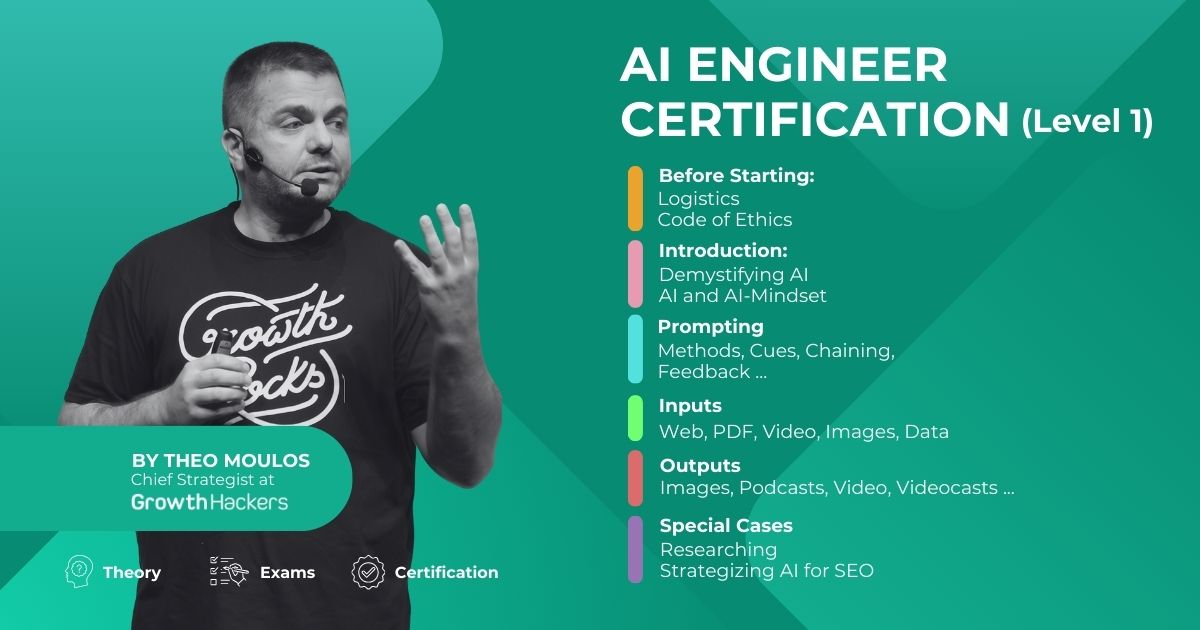
A paid certification from GrowthHackers University: prompting, working with PDFs, images, video and data as inputs, and producing landing pages, video, audio and animation as outputs. The provider states 15 hours across 28 lessons.
2 hours
FRONTLINE's documentary on artificial intelligence, its economics and who carries the cost.
18 minutes
Continuous integration applied to machine learning, in under twenty minutes.
5 hours
Five hours on MLOps: getting a model out of a notebook and keeping it running.
12 hours
Twelve hours of Python, taught by building rather than by explaining.
12 hours
Twelve hours of Python for beginners, taken slowly enough to follow along.
4 hours
Four and a half hours of Python from nothing, the course most people start with.
55 minutes
Confusion matrices, precision, recall and ROC curves, worked through in scikit-learn.
45 minutes
Forty-five minutes of scikit-learn, from fitting a model to scoring it.
32 minutes
A university lecture on evaluating a model: the measures, and what each one hides.
13 minutes
Thirteen minutes on how a model is judged, and why accuracy alone is rarely the answer.
55 minutes
Building a working e-commerce data pipeline, start to finish, with Snowflake and dbt.
3 hours
Nearly three hours on time series: the components, the models, and the forecasts built from them.
2 hours
An hour and a half of forecasting in Python, for somebody who has not done it before.
2 hours
An hour and a half on association rules: finding what goes with what in a transaction log.
2 hours
Two and a half hours on decision trees — how one is built, and how it is read.
New courses, a couple of emails a month. One click unsubscribes.